
What goes into a field report

Start with the wall photograph. Then compare the drawing, code reference and payment history to decide what the team needs to verify before backfill.

Below-grade wall assembly

Follow-up required · verify before backfill
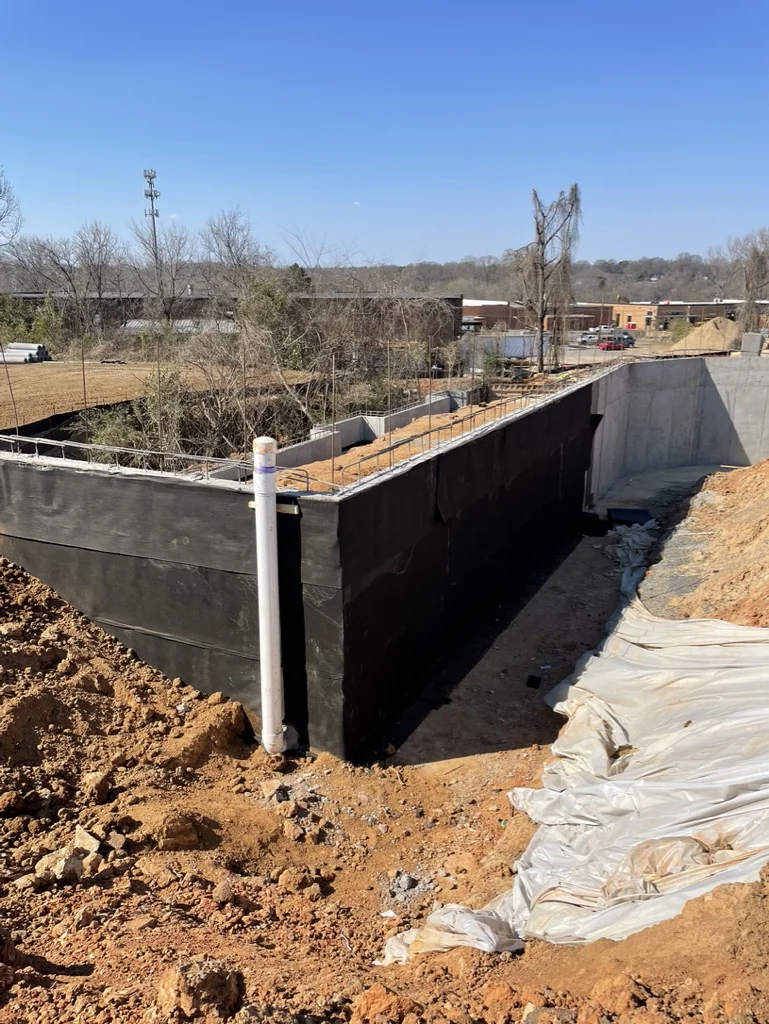
Black material on concrete wall faces beside an open excavation, with a white vertical pipe at the near corner
Original field photograph

What the photograph tells us

Black surface material covers the visible concrete wall faces. The adjacent excavation is still open. This is an opportunity to document the assembly before backfill conceals it.

What needs a closer look

The photograph does not identify the product or thickness, confirm the wall-base drainage connection, or establish the purpose of the white pipe.

The issue to carry forward

Completion of the moisture-protection and drainage assembly is unverified. Check it while the work is accessible.

What the team needs to resolve

In this illustrative case, the priority is to resolve completion evidence before the wall assembly is concealed. The concern is an evidence gap, not a confirmed defect.

Open itemEvidence requestedWho can resolve it
Assembly requirementsApproved wall detail, product submittal and installation instructions.Design team / contractor
Work before concealmentPhotos of the base, corners, joints, protection layer and drainage connection; applicable inspection records.Contractor / responsible inspector
Billing reconciliationPrior and current pay applications, scope breakdown and support for the additional $16,000.Contractor / owner’s representative
Close the itemRecord the response, verify the relevant work and carry any unresolved scope into the next review.Review team / client

Scope and source notes

This sample combines a real field photograph with illustrative drawing and billing records. The room below is a demonstration model. Neither represents a completed client report. Actual reviews use the project’s records and agreed site access. They are observational, not engineering opinions, formal ASTM assessments or compliance certifications. Concealed conditions may require further investigation. Payment authority remains with the client and funding parties.

For the illustrative Georgia code check, DCA lists the 2024 IBC with Georgia amendments effective January 1, 2026. IBC §1805.2–.4 addresses dampproofing, waterproofing and drainage. The applicable permit edition, local amendments, soil conditions and design must be confirmed for each property.

Explore a recorded observation

Illustrative 3D room. Select a numbered marker to see the observation, the records to compare and the follow-up.

Illustrative 3D model

Step into the sample room.

Three locations. A connected record of what to check and why.